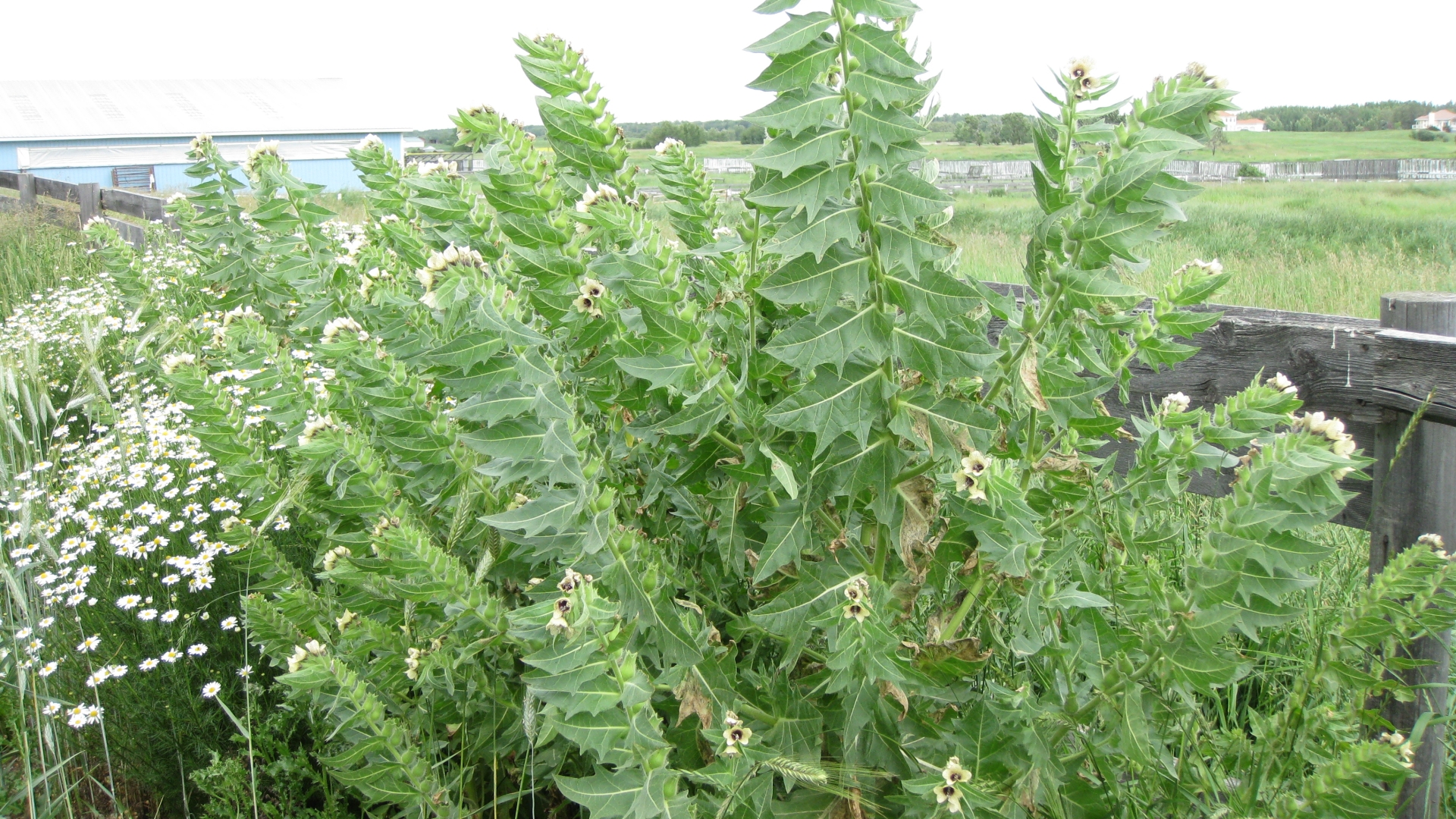
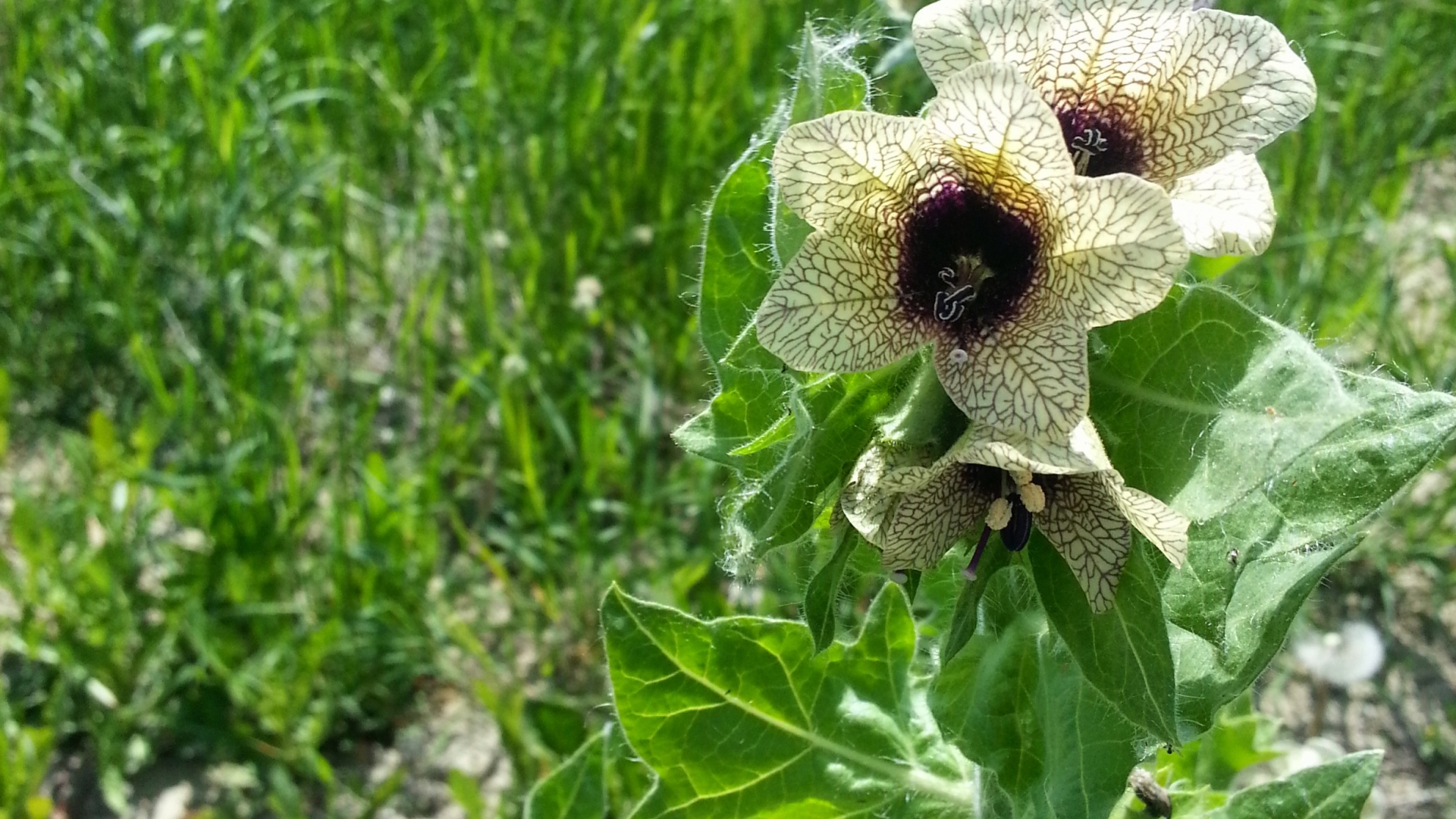
Have you come across black henbane? It’s easy to spot with its tough stalks that can grow up to a metre tall and its foul smell, which earns it the nickname stinking nightshade. Its pale-yellow flowers with dark purple veins make it easy to identify in fields, roadsides, and disturbed areas. Black henbane is designated as a noxious weed under the Weed Control Act in Alberta, meaning landowners are legally required to control its spread.
Historically, black henbane was associated with folklore and was used in a variety of traditional remedies, including treatments for insomnia. Today, it is recognized as a toxic plant that can pose a risk to both humans and animals if ingested. Black henbane contains compounds that affect the nervous system, and symptoms of poisoning may include impaired vision, confusion, hallucinations, seizures, and, in severe cases, coma. Fortunately, poisoning incidents are uncommon, as the plant's strong odor and bitter taste typically discourage people and livestock from consuming it.
Unlike many toxic plants, black henbane remains poisonous even when dried. While animals generally avoid grazing it, accidental poisoning can occur if the plant becomes mixed into hay or feed.
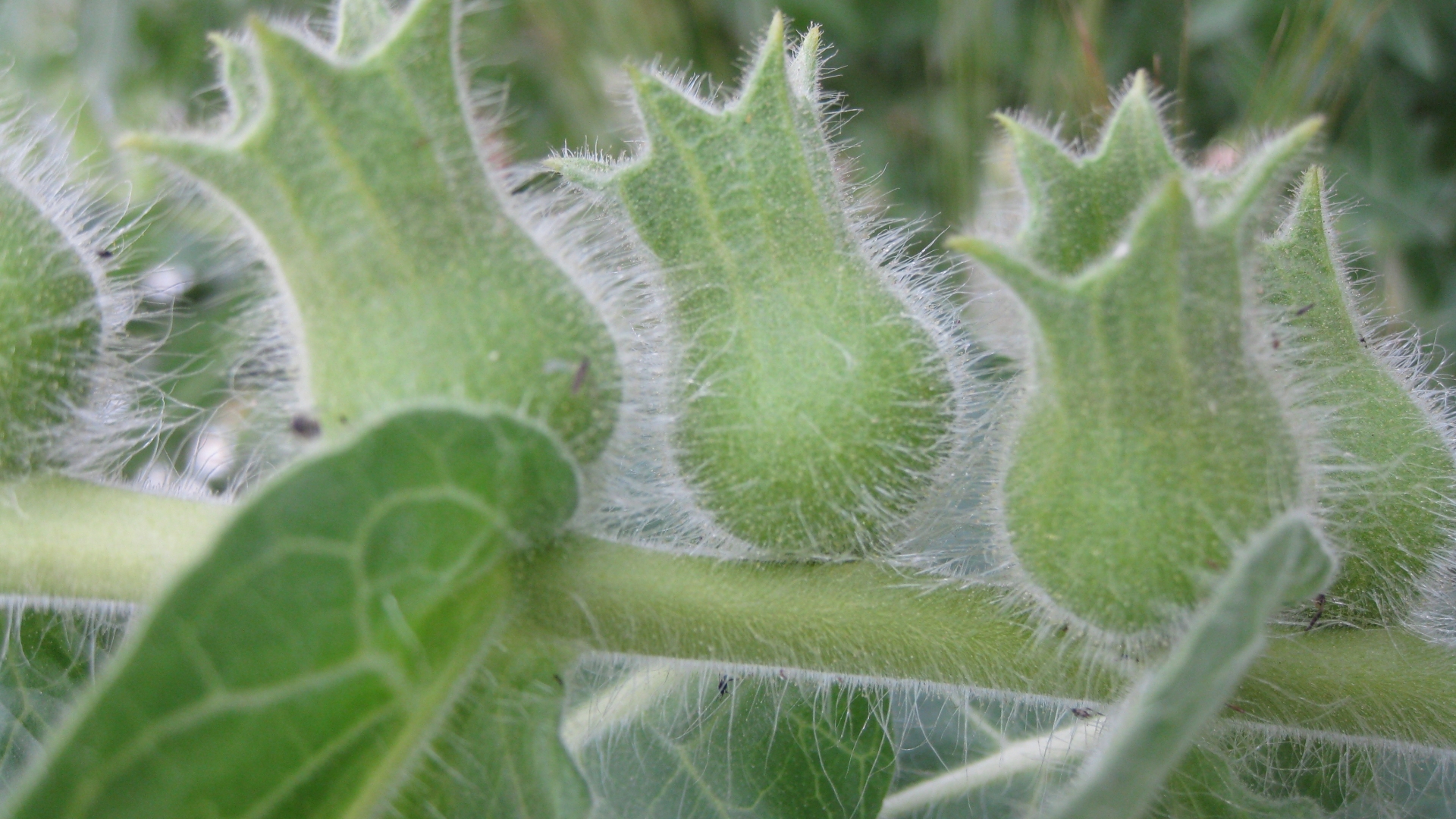
Black henbane spreads aggressively through its seeds, allowing it to spread and establish persistent populations. Each plant can produce up to 500,000 seeds, contained in distinctive urn-shaped pods that burst open when mature, scattering seeds across the soil. These small, dark seeds can remain viable for up to five years, waiting for the right conditions to sprout.
Prevention & Control
Preventing an invasion is the most effective way to control this troublesome plant. Black henbane’s biggest weakness is that it is a poor competitor. After disturbing the soil, be sure to reseed it as quickly as possible to help prevent new infestations. This persistent species requires early detection and prompt removal to halt its spread. Stay vigilant for potential habitats and infestations, and act swiftly to remove any new plants you spot.
Though black henbane is a tough opponent, several control strategies can help. Mowing can destroy flowering stalks and prevent seed production, but if done after seed pods have matured, it may inadvertently spread seeds.
Hand pulling is an effective option for small infestations because black henbane is a biennial and will not regrow once the root is removed. Pulled plants should be bagged immediately and disposed of in the garbage to prevent seed spread. While simply touching the plant is not known to cause poisoning, wearing gloves and long sleeves is recommended as a general safety precaution to reduce the risk of skin irritation and accidental transfer of plant material to the mouth or eyes.
Recently, several herbicides have also been registered for use against black henbane. ClearView, Reclaim II, and Sightline A are available to agricultural producers and have been registered for black henbane control. These herbicides have residual activity and can provide multi-season control of black henbane and other weeds. Acreage owners can only access these herbicides through a certified contractor.
Hiring a certified contractor who uses commercial-grade products with residual activity can be a practical option for managing larger infestations. Regardless of the product used, always read and follow all label instructions carefully to ensure safe and effective application.
Dig Deeper
For more information on invasive species and native plants, please see the resources listed below.
Weed Identification
- Alberta Invasive Species Council (AISC) – Website, Weed Identification Book
- AISC Invasive Plant Fact Sheet – Black Henbane
- Association of Alberta Agricultural Fieldmen (AAAF) – Association Involvement in Weed Control
- Rocky View County Report Problem Weeds (For species found on the Weed Control Act) – Online Form
Native Species
- Alberta Native Plant Council – Website
- ALCLA Native Plant Nursery – Website
- Grow Me Instead – Plant Wise Brochure