
Missed Article 1 of this multi-article series? Start with Article 1: What is a Wetland? and follow along as we explore the important functions wetlands provide and why they matter.
Wetlands play a critical role in how water moves across Alberta’s landscapes. While they may look like quiet, low-lying wet areas, wetlands are both active and dynamic systems that help store, filter, and release water. In doing so they support healthier watersheds and provide important benefits to communities, agricultural lands, and the environment.
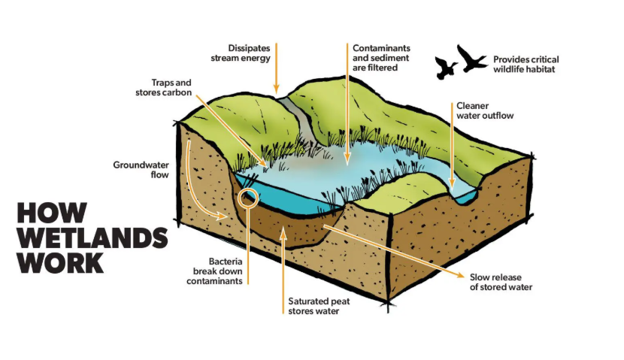
One of the most important functions of a wetland is water storage. During spring snowmelt, heavy rainfall, or periods of runoff, wetlands can temporarily hold water that would otherwise move quickly across the land. By storing this water, wetlands help reduce the speed and volume of runoff moving into ditches, streams, rivers, and stormwater systems.
A wetland’s storage function can help reduce localized flooding and erosion. When water moves too quickly over land, it can carry soil, nutrients, and other materials into nearby water bodies. Wetlands slow this movement, giving water time to settle and infiltrate into the surrounding environment. This can reduce pressure on downstream drainage systems and help protect other water bodies, such as creeks, rivers, lakes, and reservoirs.
Wetlands also act as natural filters. As water passes through a wetland, suspended sediments can settle out. Wetland plants, soils, and microorganisms can help capture, break down, or transform some nutrients and contaminants before they move farther downstream. This filtering process can improve water quality and support the overall health of the watershed.
In agricultural and rural areas, wetland functions are especially important. Wetlands can help retain moisture on the landscape, reduce erosion, and support moisture infiltration into the soil. Depending on local conditions, some wetlands may also contribute to groundwater recharge by allowing water to slowly move below the surface.
Wetlands do not work in isolation. They are connected to the surrounding landscape through surface water, groundwater, soils, vegetation, and drainage patterns. A wetland in one location may influence water conditions well beyond its visible boundary. This is one reason why the loss or alteration of wetlands can affect water quality, flow patterns, and watershed health downstream.
In Alberta, where weather can shift between wet years, dry years, heavy storms, and periods of drought, wetlands provide valuable natural resilience. They help hold water when there is too much, release it slowly over time, and support landscape function during changing conditions.
Conserving wetlands is not only about conserving habitat. It is also about maintaining natural water infrastructure. Healthy wetlands help manage runoff, protect water quality, reduce erosion, and support more resilient watersheds.
In the next article, we will explore how wetlands provide essential habitat for wildlife and contribute to biodiversity across Alberta.
Sources:
- Alberta NAWMP Partnership. (2022). Landowner Guide to the Alberta Wetland Policy: What is important to know before working in and around wetlands on your farm or ranch. Ducks Unlimited Canada. https://wetlandsalberta.ca/media/uploads/WetlandLandownersGuide.pdf