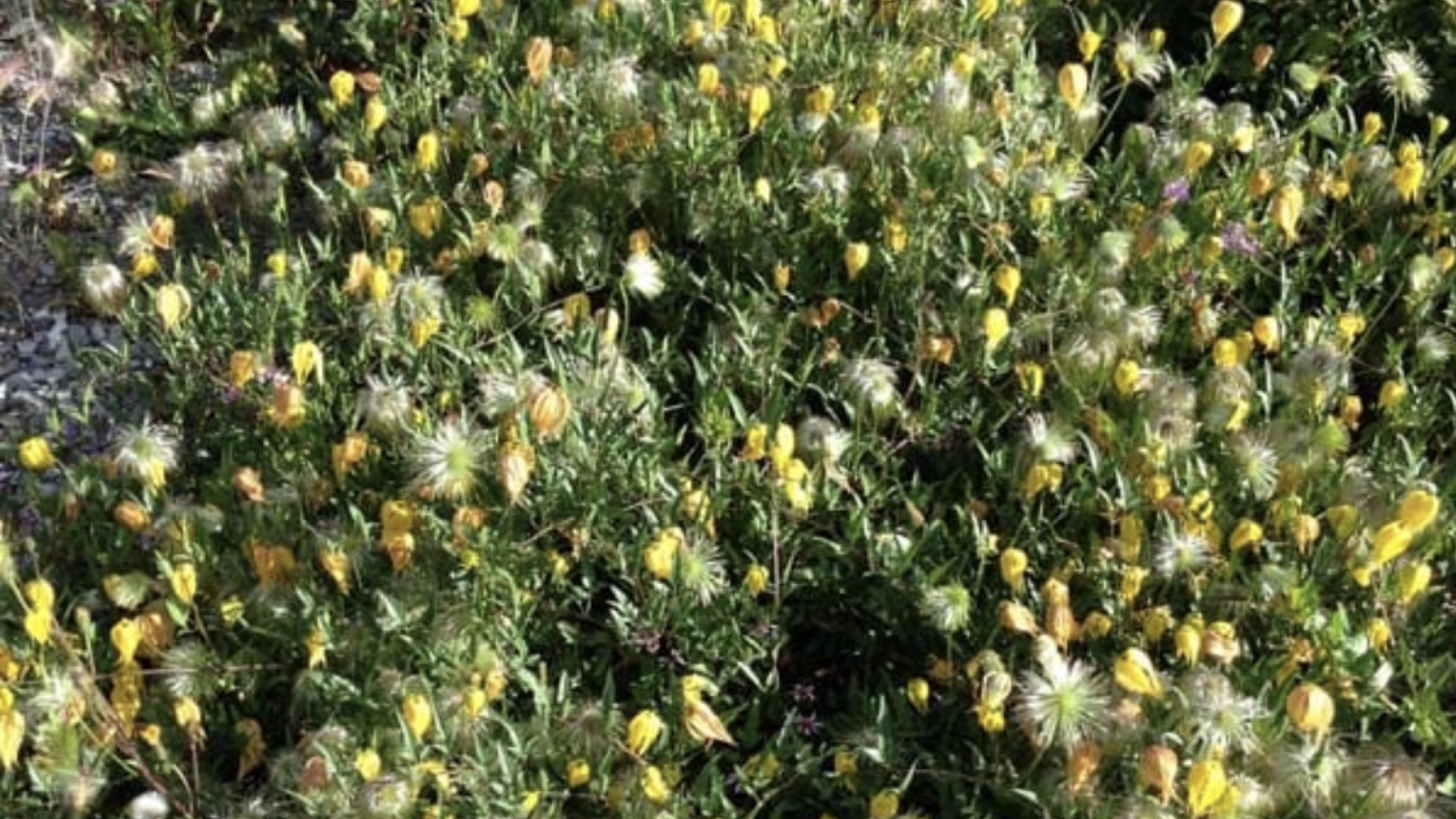
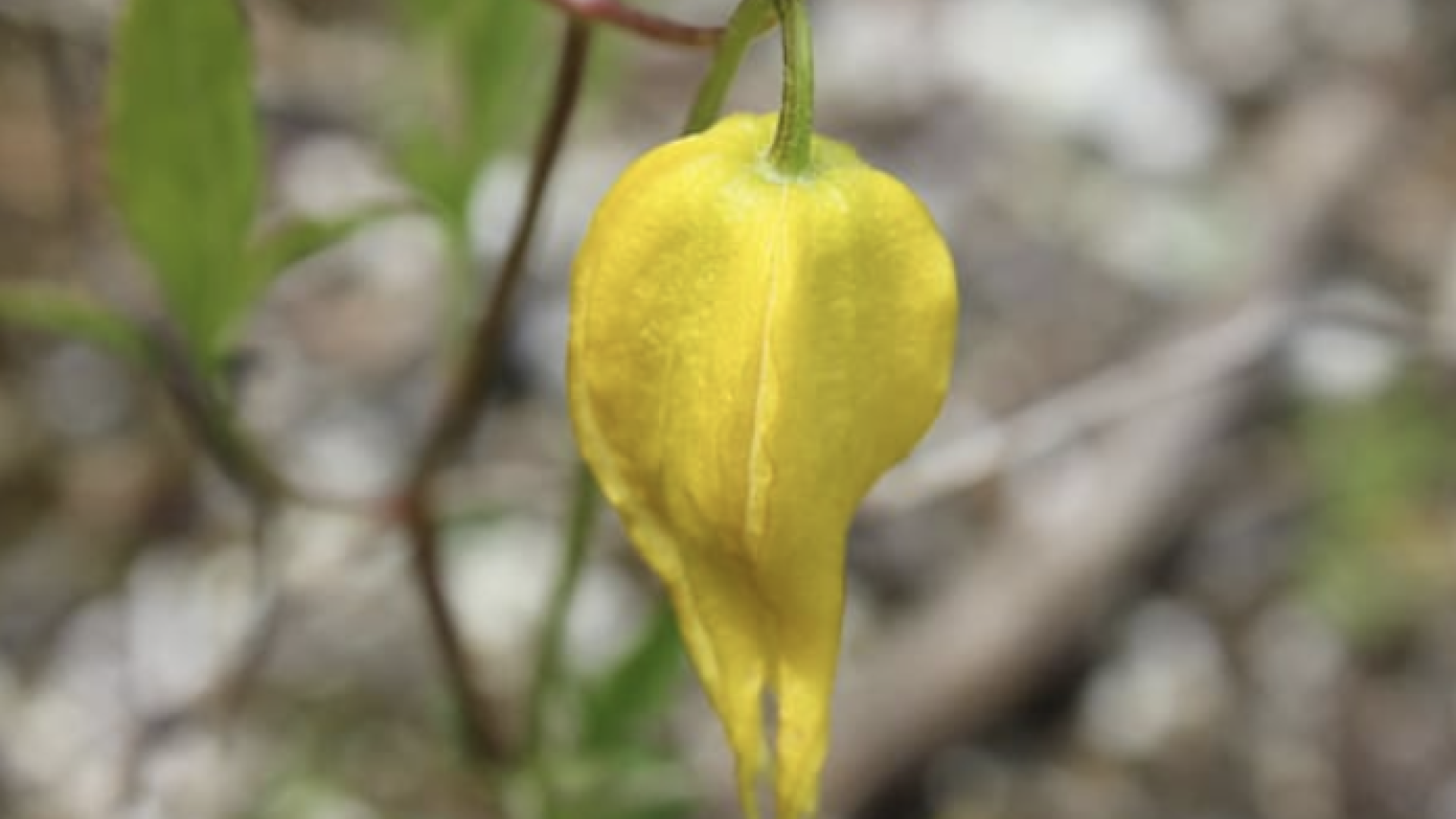
The bright yellow, nodding flowers of yellow clematis may look attractive, but this vigorous perennial vine can quickly climb over fences, shrubs, and trees, making established infestations difficult to manage. Also known as golden clematis, Clematis tangutica is listed as a noxious weed under Alberta's Weed Control Act. Landowners are required to control existing infestations and prevent the plant from spreading.
Yellow clematis is sometimes sold as an ornamental plant, making it especially important to check plant labels before purchasing. When buying clematis, look for the Latin name and avoid Clematis tangutica.
Identification and Habitat
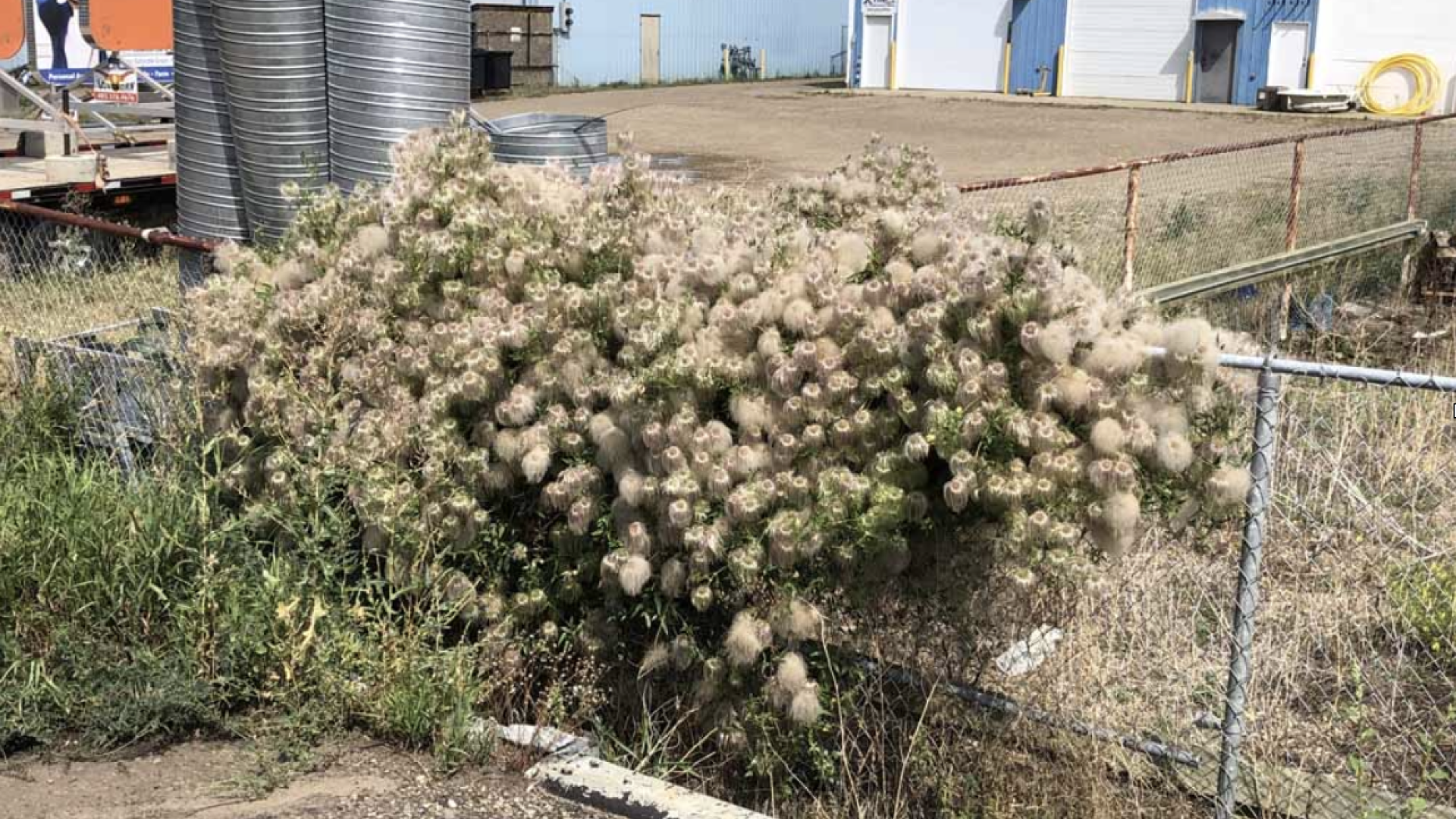
Yellow clematis is most easily recognized by its lemon-yellow, nodding flowers, which have four petal-like sepals and typically appear from mid-summer into fall. The plant is a climbing vine that can grow over fences, shrubs, and trees. Its leaves are divided into several leaflets and its flowers are followed by distinctive, feathery seed heads.
Alberta has two native clematis species, which can have purple, blue, or white flowers. Proper identification is important before beginning control, particularly because native clematis species provide ecological value.
Yellow clematis is cold and drought tolerant and can survive in relatively poor soils. It prefers full sun but can tolerate partial shade. It may be found in open woodlands, grassy areas, along disturbed sites, and in gravelly or industrial areas.
Prevention and Control
The best defence against yellow clematis is prevention. When purchasing ornamental plants, check both the common and Latin names to ensure you are not introducing yellow clematis to your property. Avoid planting unknown species, particularly those that are known to be invasive.
Once established, yellow clematis can be difficult to control because its climbing growth habit allows it to become intertwined with desirable trees and shrubs. Preventing seed production and removing plants before they become established is important for limiting spread.
Small infestations and plants growing in sensitive areas may be managed by hand pulling or digging, preferably before seed develops. Care should be taken to remove as much of the root system as possible. Because plants can re-establish from missed roots or new seedlings, follow-up monitoring and removal will likely be necessary.
For larger or established infestations, herbicide treatment may be an option depending on the location and surrounding vegetation. Because yellow clematis commonly grows through desirable trees and shrubs, treatment methods should be selected carefully to avoid damage to non-target plants. Always use products registered for the intended site and follow all label directions.
Dig Deeper
For more information on invasive species and native plants, please see the resources listed below.
Weed Identification
- Alberta Invasive Species Council (AISC) – Website, Weed Identification Book
- AISC Invasive Plant Fact Sheet – Yellow Clematis
- Association of Alberta Agricultural Fieldmen (AAAF) – Association Involvement in Weed Control
- Rocky View County Report Problem Weeds (For species found on the Weed Control Act) – Online Form
Native Species
- Alberta Native Plant Council – Website
- ALCLA Native Plant Nursery – Website
- Grow Me Instead – Plant Wise Brochure