
As temperatures across Alberta sometimes change from -20°C to +15°C within a few days, the impact on tree and shrub health can be significant. Winter freeze thaw cycles damage trees by causing expansion and contraction that lead to bud, twig, and branch mortality, frost cracks, bark splitting, winter desiccation, and sunscald. Wounds from freeze thaw cycles also allow diseases to enter tree tissues more easily.
Repeated freezing and thawing of soil can also cause frost heaving, exposing roots. These cycles can disrupt water transport, leading to winter drought, tissue death, and mortality of parts or entire trees and shrubs.
Types of Freeze Thaw Damage
Most trees and shrubs have evolved and adapted to withstand prairie winter conditions, yet repeated fluctuations between freezing and thawing can impose significant physiological, mechanical, and ecological stress. Over multiple years, these cycles can weaken trees, making them more susceptible to pests, diseases, and drought.
Fall Cold Acclimation
Trees and shrubs undergo a process known as cold acclimation in autumn. Long before winter arrives, they begin preparing their tissues for the stress of freezing temperatures. During this fall period, trees adjust their internal chemistry by increasing concentrations of sugars, proteins, and other protective compounds that function as natural antifreeze agents. These substances lower the freezing point of cell sap and stabilize cell membranes, significantly improving cold tolerance and winter survival. However, during mid-winter thaws, when warmer temperatures signal trees to partially de acclimate, they become highly vulnerable to frost injury.
Cellular Damage
At the cellular level, freezing temperatures present a fundamental challenge involving water. Ice formation inside living cells can rupture cell membranes and cause irreversible damage. To prevent this, most cold hardy trees rely on extracellular freezing, in which ice forms in the spaces between cells rather than within them. As ice develops outside the cells, it draws water out, causing cellular dehydration. While this mechanism protects critical structures, severe or prolonged dehydration can still injure tissues, especially fine roots, buds, and young shoots that are less tolerant of moisture loss.
Water Transport System Damage
One of the most significant impacts of freezing and thawing occurs within the tree’s water transport system. When temperatures drop below freezing, sap within these vessels can freeze, trapping air bubbles. Upon thawing, these bubbles may expand and block water movement in a process known as cavitation or embolism. When embolisms are widespread, the tree’s ability to transport water from roots to leaves is compromised, leading to reduced growth, branch dieback, and in severe cases, tree mortality. Species with larger water conducting vessels tend to be more susceptible to this type of damage, while conifers are generally more resistant.
Mechanical Stress
Repeated freezing and thawing can also cause mechanical stress to tree tissues. Water expands as it freezes, creating pressure within bark, wood fibers, and roots. Over time, this expansion and contraction can result in frost cracks, which are long vertical splits in the trunk that occur when the outer layers of wood cool and contract faster than the inner core. Although these cracks may close during warmer weather, they often reopen in subsequent winters, creating long term weak points. Frost cracks serve as entry sites for decay fungi, insects, and pathogens, accelerating structural decline.
Root System Damage
Freezing and thawing in the soil have major implications for root systems. As soil freezes, ice lenses can form, causing frost heaving that physically lifts roots closer to the surface. Shallow rooted trees and newly planted seedlings are particularly vulnerable. Exposed roots may suffer cold injury, desiccation, or mechanical breakage. During thaw periods, saturated soils can reduce oxygen availability to roots, leading to root stress or death.
Damage to Buds and Shoots
Buds and shoots are highly sensitive to temperature fluctuations in late winter and early spring. Thaw events can prematurely stimulate bud development, initiating growth before conditions are stable. If a hard freeze follows, newly swollen buds and emerging tissues are extremely susceptible to frost damage. Such injury can reduce flowering, leaf development, and fruit production, with lasting impacts on tree health and productivity.
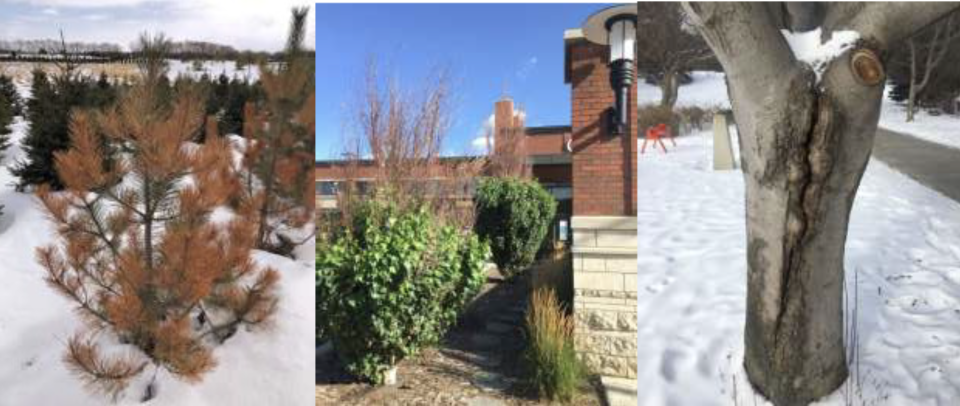
Pictures: Winter desiccation on pine (L); branch dieback due to frost on birch (C); large frost crack (R)
Management Recommendations
Nothing can be done to control weather patterns or prevent freezing and thawing cycles that cause damage to trees and shrubs. However, there are some management practices that can help reduce the severity of injury, support recovery after damage occurs, and improve long term resilience. These management options focus on minimizing additional stress, promoting healthy regrowth, and preventing secondary impacts such as pest infestation, disease development, and drought stress.
Timely assessment is essential following winter and early spring freeze thaw events. Trees and shrubs should be assessed early in spring for visible signs of damage, including frost cracks, bark splitting, branch dieback, broken limbs, and root exposure caused by frost heaving. These are some management options for trees and shrubs impacted by freeze thaw effects:
- Inspect trees for signs of frost cracks, split bark, branch dieback, and winter breakage. Promptly remove damaged branches and severely compromised trees to prevent decay, insect infestation, and hazardous failures.
- Maintain ground cover by adding wood chips around trees to moderate soil temperature fluctuations. Mulching with wood chips or organic material helps insulate the soil, reduce frost heaving, and conserve moisture during thaw periods.
- Conduct pruning during the dormant season to reduce stress on trees, limit the spread of insects and pathogens, and allow pruning wounds to seal more effectively once growth resumes.
- Maintain detailed records of trees damaged by freeze thaw cycles, including photographs, species, site conditions, tree age, and the extent or percentage of damage. These records provide valuable information for evaluating site suitability and support informed selection of tree species that are better adapted to local conditions.
- Provide supplemental watering in early spring to ensure adequate soil moisture is available to tree root systems as growth resumes.
- Apply fertilizers in early spring, based on soil and tree condition, to supply essential nutrients that support recovery and regrowth of damaged trees.
- Choose tree species adapted to local freeze thaw regimes to increase long term survival and reduce maintenance needs.
- Avoid soil disturbance during vulnerable periods to further protect root systems from temperature extremes.
- Water trees in the fall before freezing to protect roots.
- For young fruit trees and other young trees with thin bark, adding a plastic tube around the trunk in the fall can reduce bark splitting caused by sunscald.
Written by:
Toso Bozic, ISA Certified Arborist
ATTS Group Inc.